
 Publication:18.09.2026
TMS-IBS
- Category: Algotrading
- Asset class: Futures
Description
EN
Intraday breakout strategy based on the Initial Balance (IB) range. It automates trade management within a specified session window and closes all positions before a defined Hard-Close time, preventing overnight exposure. Designed for traders focusing on opening range breakouts; not intended for scalping or swing trading.
Key Features
-
Automated Trade Execution: Manages entries, Stop Loss, Take Profit, and time-based exits according to user parameters.
-
Safety Mode: Features a Live Trading Enabled toggle to switch between visual backtesting and live order routing.
-
On-Chart Performance Panel: Displays historical backtest metrics directly on the chart, including Win Rate, Profit Factor, Net Ticks, and Max Drawdown.
-
Pullback Order Entry: Waits for a candle close beyond the IB range followed by a configurable percentage retracement before entering.
How It Works
-
Range Calculation: Measures the high and low of the IB window at session open.
-
Breakout Confirmation: Detects a candle closing outside the IB boundary (high or low).
-
Pullback Trigger: Tracks price after the breakout and enters only when price retraces by the specified percentage toward the breakout level.
-
Exit & Hard-Close: Manages positions via predefined SL/TP parameters (e.g., SL at 100% IB width, TP at 200% IB width) and closes open trades at the Hard-Close time.
Settings
-
Session & Time Rules: IB start/end times and Hard-Close cutoff minute.
-
Execution & Safety: Live Trading Enabled toggle and contract/lot sizing.
-
Breakout & Retracement: Retracement percentage requirement before order trigger.
-
Risk & Target Management: SL/TP modes (Percent/Ticks/Points) and target multipliers.
-
Backtest Overlay: Visual controls for the performance metrics panel on the chart.
Use Cases
-
Opening Range Breakout Trading: Automating entry and risk management during early session volatility.
-
Parameter Optimization: Testing various IB windows, retracement percentages, and target ratios on historical chart data before enabling live execution.
An educational project focused on futures and prop-firm trading. No promises of quick profit — just real situations on Nasdaq and S&P 500 in live-session format, price action, market structure, and order flow. Beyond educational content, Einfach Traden offers its own indicators for analyzing volume, price, and order flow in ATAS.
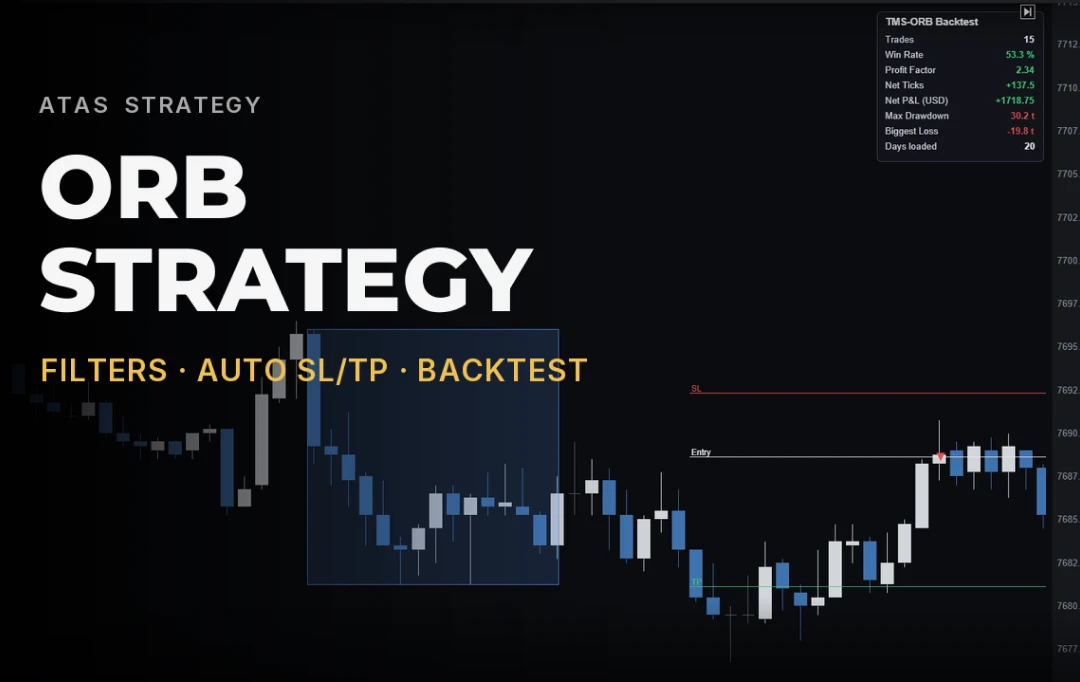
Automates Opening Range breakouts via 3 entry modes with SL, TP, and position sizing. Features daily risk filters and an on-chart backtest panel displaying performance metrics. Designed for ATAS.
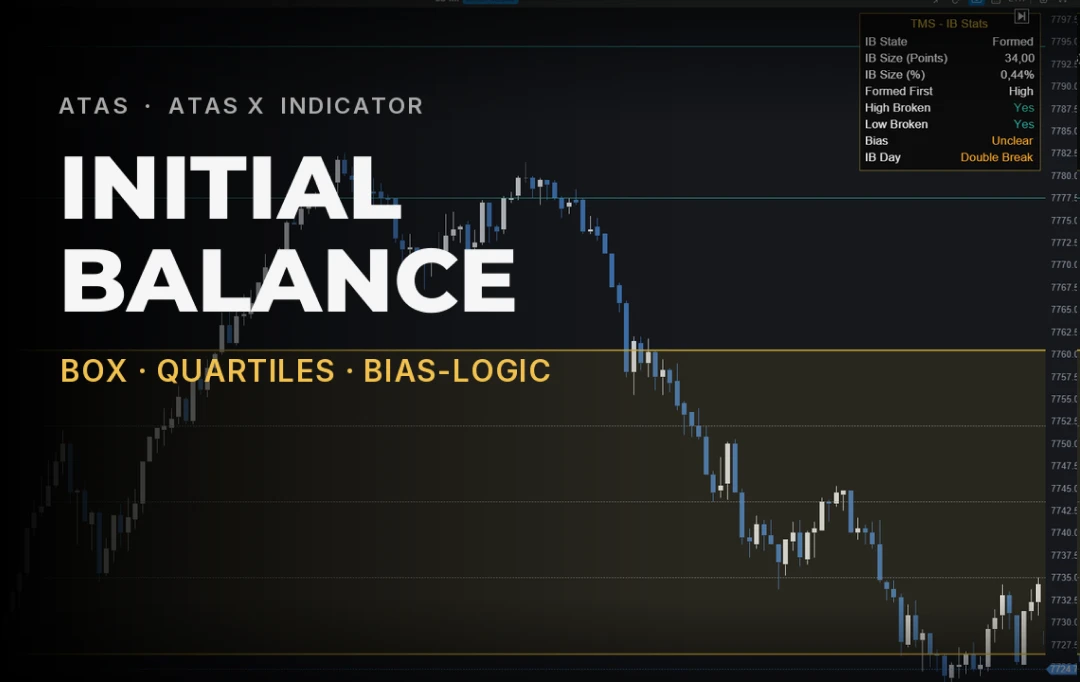
Plots Initial Balance with high/low, quartiles (25/50/75%), and extension levels. Features a stat table with breakout behavior, IB Day types, and directional bias (Long/Short/Unclear) for personal analysis. Built for 1m–15m charts.
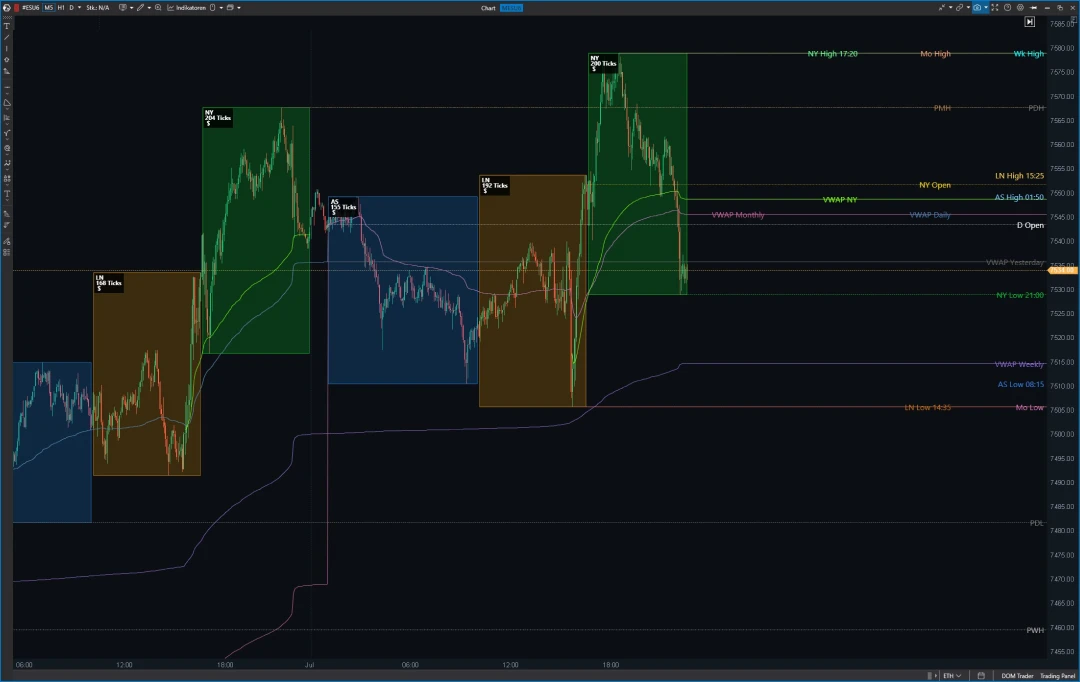
Shows session ranges, Key Levels, and various VWAP levels directly on the chart. All in one tool, fully configurable to the trader's own analysis style.
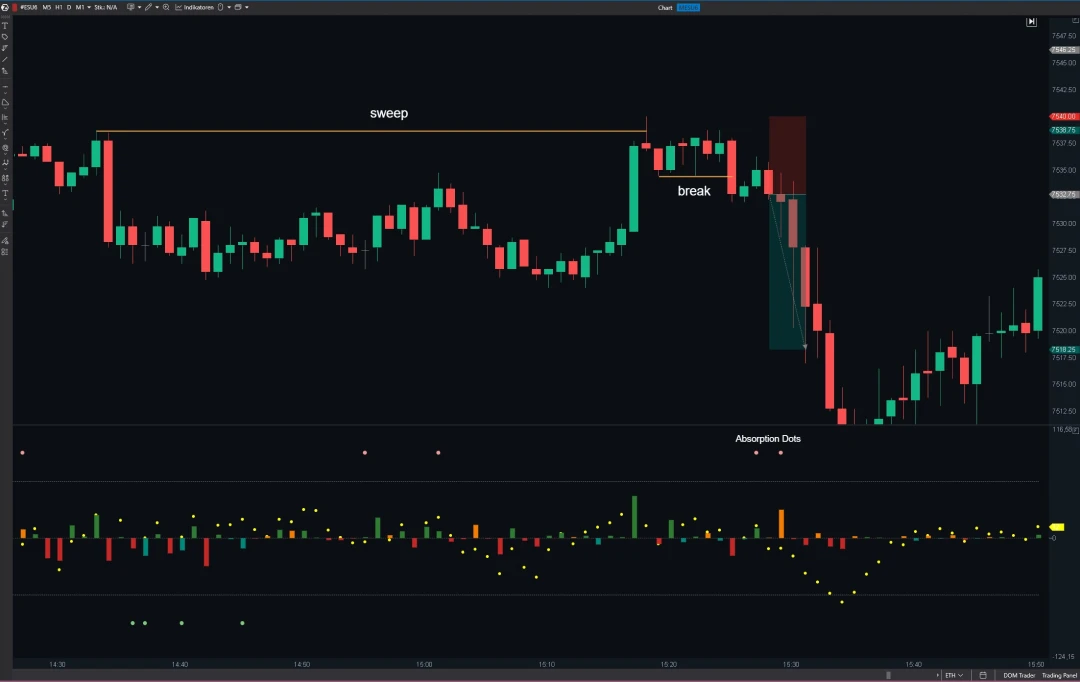
The indicator links aggressive order flow with the actual price reaction, helping traders structurally evaluate control, initiative, efficiency, and absorption.
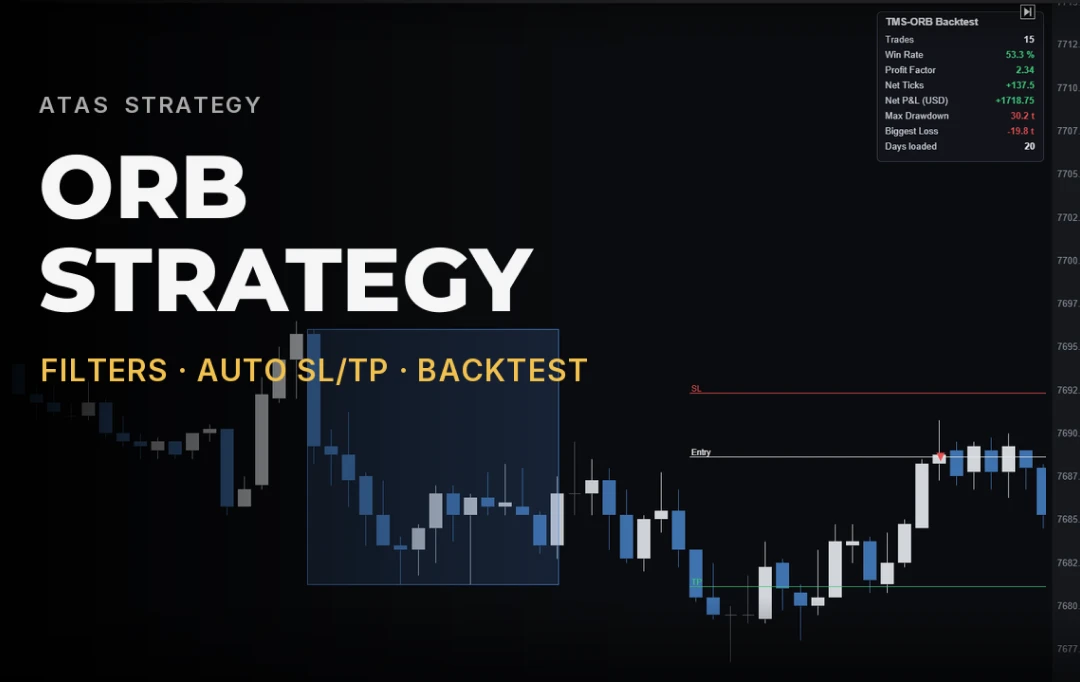
Plots Opening Range as a box with up to 8 extension targets (4 up, 4 down). Stat panel: status, ORH/ORL, and range size in points, ticks, and %. Pure visual overlay — no automated execution or risk management. Built for 1m–15m charts.
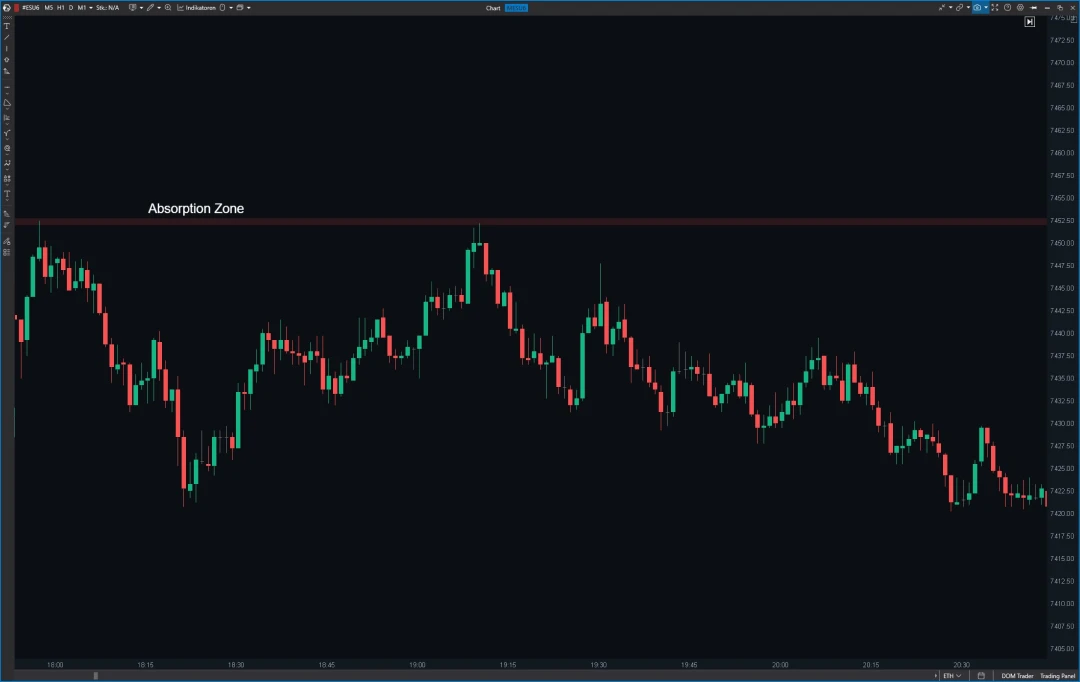
Highlights zones on the chart where price has repeatedly reacted before — ready-made support and resistance reference points, no manual line-drawing required. Not a buy/sell signal, just clean market structure for the trader's own analysis.
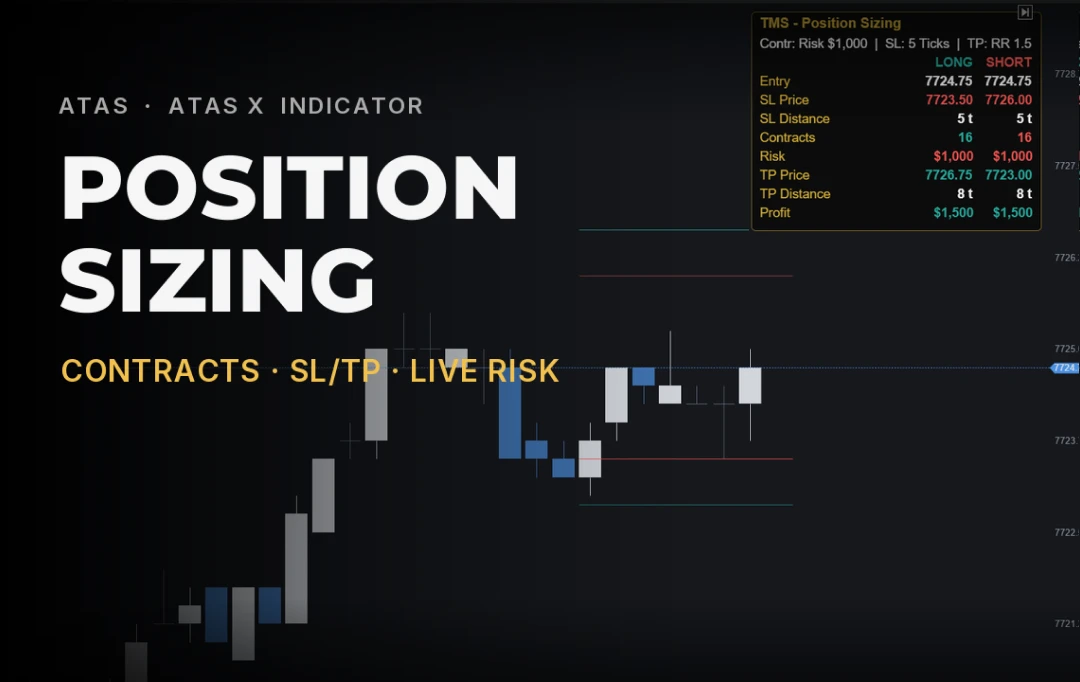
Calculates real-time, tick-exact contract sizes, SL/TP prices, risk, and reward simultaneously for LONG and SHORT. Updates continuously per candle without executing trades. Built for ATAS and ATAS X.
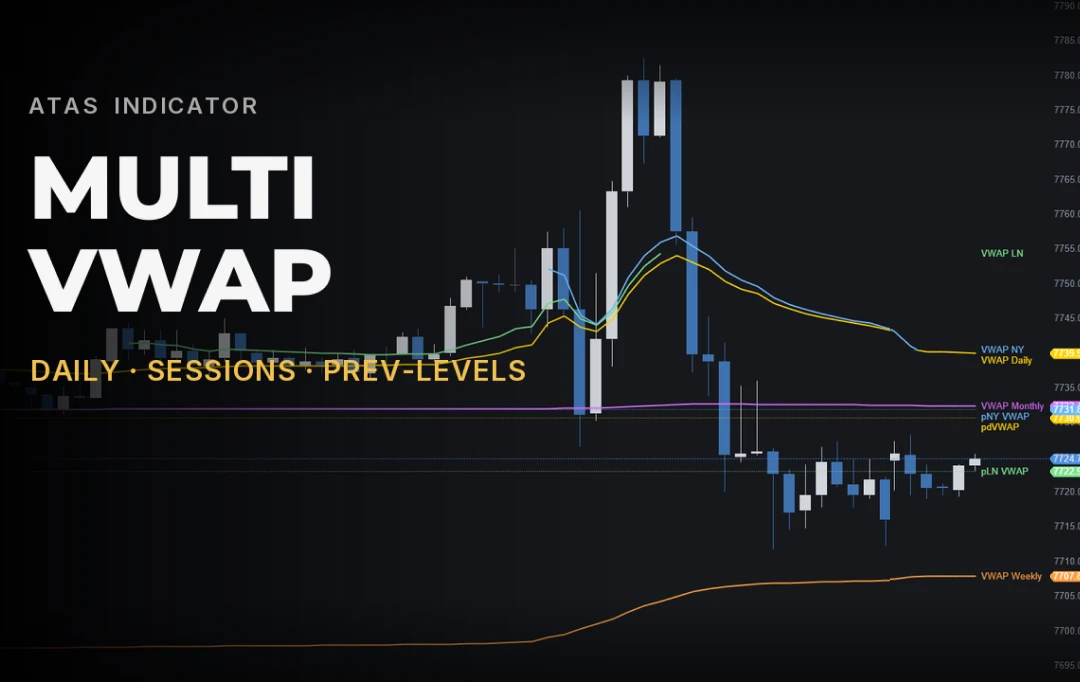
Displays up to 5 custom VWAPs simultaneously (Daily, Weekly, Monthly, London, New York) with individual toggles and color settings. Historical period lines freeze final VWAP levels as support/resistance zones. For ATAS and ATAS X.

In this masterclass you'll learn to read footprint elements, linking them to auction theory and market fundamentals. 8 practical strategies, live examples, and practice material — about 10 hours of video on entries and stops.